A golden serum droplet falling from a glass dropper into a glass dish

The Science

Real Research. Real Possibility.

Explore the research behind hair health, ingredient selection, and the everyday concerns that shape our approach to scalp care.

Explore the research
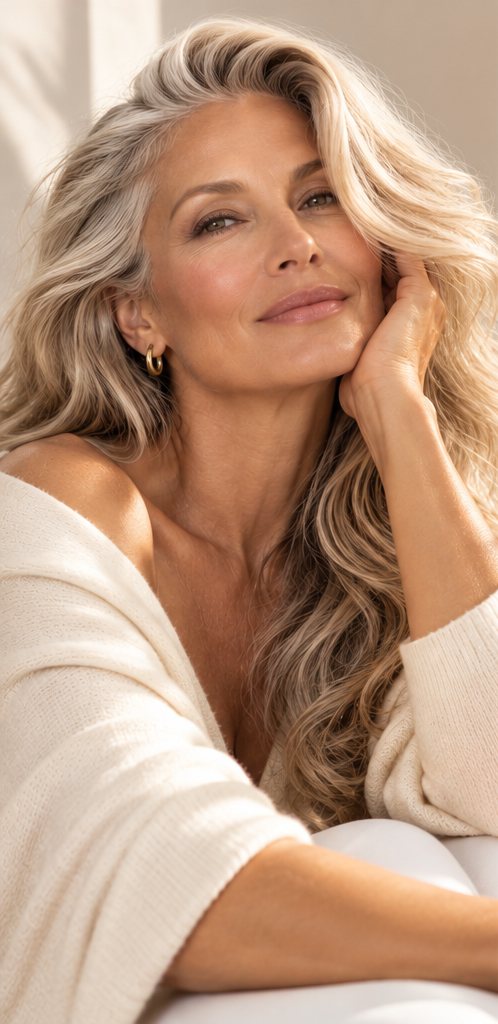
Woman with long, wavy silver-blonde hair resting her head on her hand

Understanding Hair Health

Your Hair Changes. Your Care Should Evolve.

Hair is personal. Its needs can shift with time, biology, lifestyle, and the way we care for it. We believe understanding those changes is the beginning of more intentional hair care.

Genetics
Inherited factors play a major role in female pattern hair loss, the most common cause of thinning hair in women.1
Aging
Hair density tends to decline gradually over the years, and individual strands become finer after midlife.2
Biology
Natural biological changes over a lifetime, including hormonal shifts, can affect how fast hair grows and how thick each strand is.3,4
Nutrition
Low levels of nutrients such as iron are linked with shedding. Supplements tend to help mainly when there is a true deficiency, and too much of some nutrients can contribute to hair loss.5
Styling
Repeated tension from tight styles can thin the hairline and edges over time.6
The scalp
Scalp conditions linked to oxidative stress, such as dandruff, are associated with poorer hair quality.15
Explore the research

Key Ingredients

Nature and Science, Working Together.

What is in each serum, what the research suggests, and where the evidence is still limited.

In Density Serum

Peptides

Five lab-made biomimetic peptides: short chains of amino acids designed to resemble signaling proteins found naturally in the body.

What research suggests

Small placebo-controlled studies of other topical peptides reported a higher share of thick hairs or growing-phase hairs after about four months.13,14

What remains uncertain

Those studies were small, run or funded by the companies that make the peptides, and tested different peptides from ours. Independent human trials are still lacking.

In both serums

Rosemary

A Mediterranean herb with a long history in scalp care.

What research suggests

In a six-month randomized trial of 100 adults with pattern hair loss, rosemary oil applied to the scalp performed similarly to 2% minoxidil for hair count, with less scalp itching.8

What remains uncertain

It was a single study with no placebo group, and it used rosemary oil. Our serums contain rosemary extract, a different preparation.

In Density Serum

Saw Palmetto

An extract from the berries of a palm native to the southeastern United States.

What research suggests

A systematic review found improvements in hair quality and hair count across small studies of saw palmetto products, taken by mouth or applied to the scalp.9,10

What remains uncertain

The reviewers describe good-quality data as lacking. Most products combined saw palmetto with other ingredients, and few studies included women.

In Root Renewal

Ginger Root

We include ginger root extract for its potential antioxidant and scalp-care properties.

What research suggests

Laboratory research shows that compounds in ginger, such as gingerols, have antioxidant activity.11

What remains uncertain

These findings come from laboratory studies, not from people. Research has not shown that ginger promotes hair growth, and in one laboratory and animal study, an isolated ginger compound slowed hair growth.12 We make no hair growth claims for ginger.

In both serums

Glycerin

A humectant that draws water into the outer layer of the skin.

What research suggests

Research reviews show glycerin improves skin hydration and supports the skin’s protective barrier.17

What remains uncertain

This research covers skin in general rather than the scalp specifically.

Please note

Ingredient research is not product testing.

The studies on this page looked at individual ingredients, often in different forms, at different strengths, or taken by mouth. None of them tested Density Serum or Root Renewal.

Our finished serums have not been studied in clinical trials, so we describe what research suggests about ingredients, never proven results for our products.

Density Serum: full ingredients

Water, Glycerin, Lecithin, Propanediol, Arginine, Caprylyl Glycol, Citric Acid, Eucalyptus Globulus Leaf Extract, Tocopherol, sh-Polypeptide-11, sh-Polypeptide-1, sh-Oligopeptide-2, sh-Oligopeptide-10, sh-Polypeptide-9, Lactic Acid, Glycine Soja (Soybean) Germ Extract, Triticum Vulgare (Wheat) Germ Extract, Scutellaria Baicalensis Root Extract, Sodium Benzoate, Gluconolactone, Calcium Gluconate, Potassium Sorbate, Rosmarinus Officinalis (Rosemary) Extract, Xanthan Gum, Sodium Gluconate, Serenoa Repens (Saw Palmetto) Extract.

Root Renewal: full ingredients

Water, Glycerin, Rosmarinus Officinalis (Rosemary) Leaf Extract, Propanediol, Chlorella Emersonii Extract, Lecithin, Spirulina Maxima Extract, Ascorbic Acid, Tocopherol, Baicalin, Zingiber Officinale (Ginger) Root Extract, Glycyrrhiza Glabra (Licorice) Root Extract, Sodium Benzoate, Potassium Sorbate, Arginine, Lactic Acid, Glycine Soja (Soybean) Germ Extract, Triticum Vulgare (Wheat) Germ Extract, Scutellaria Baicalensis Root Extract, Gluconolactone, Calcium Gluconate, Tremella Fuciformis Extract, Sodium Gluconate.

Both formulas are vegan, cruelty free and fragrance free, and made without parabens, phthalates, silicones and sulfates. Both contain soybean and wheat germ extracts. Patch test before first use.
Research & Evidence

Real Questions. Evidence-Based Answers.

Three of the most common hair concerns women share, and what published research can tell us about each.

Smiling woman with tousled brunette curls in the sunlight

Concern one

Changing Hair Density

The concern

Many women notice that their hair feels finer or their part looks wider over time, often beginning in midlife.

What the research shows

In a study of about 1,400 women, hair density declined gradually from the twenties onward, while the thickness of each strand increased until the early forties and then declined. Women most often noticed thinning in their mid forties and again in their fifties.2 Reviews describe female pattern hair loss as common and shaped by genetics and hormones.1 Biological changes that come with age, including hormonal shifts, can also affect growth rate and strand thickness, especially toward the front of the scalp.3,4

Limitations

The large density study included only white women and measured different women at a single point in time rather than following the same women over years. Several authors had ties to hair care companies.

In everyday life

Gradual change with age is normal. Sudden or patchy shedding is a reason to see a dermatologist, who can discuss medical treatments such as topical minoxidil.1 Density Serum is designed for fuller-looking hair and hairline care. Like all cosmetic serums, it cares for the look of your hair and does not treat hair loss of any kind.

Sources: 1, 2, 3, 4

Woman with voluminous natural curls wrapped in champagne satin

Concern two

Hairlines & Edges

The concern

Thinning at the hairline, temples and edges, often after years of braids, ponytails, extensions or wigs.

What the research shows

Traction alopecia develops from repeated pulling on the hair. In its early stages it can often be reversed once the tension stops, but long-standing traction can cause permanent scarring.6 A dermatology review ranked styles by risk and found it highest when tension is combined with chemically relaxed hair, as with tight braids, weaves and extensions on relaxed hair.7

Limitations

Both sources are expert reviews of existing research rather than new trials, and much of the evidence focuses on Black hairstyling practices. Research on cosmetic products for edges is limited.

In everyday life

Looser styles, rotating between styles and giving your edges regular rest all reduce tension. Styles that hurt or cause bumps along the hairline are a sign to loosen up. Density Serum is made for a gentle hairline and edge ritual, but no serum can undo scarring, so see a dermatologist if your hairline changes.

Sources: 6, 7

Woman with glossy dark hair and a center part gently touching her scalp

Concern three

Scalp Nourishment & Hydration

The concern

A scalp that feels dry, tight or flaky, and hair that seems to lose its shine along with it.

What the research shows

Research links oxidative stress to poor scalp conditions such as dandruff, and improvements in the scalp were accompanied by better hair quality.15 In a 24-week randomized, placebo-controlled trial, a shampoo and leave-on treatment containing antioxidants and other actives reduced shedding and increased hair count compared with placebo.16 Glycerin, found in both of our serums, is well studied for improving skin hydration and barrier function.17

Limitations

Both scalp studies were run by a hair care manufacturer and tested specific ingredient combinations that differ from ours. Glycerin research covers skin in general, not the scalp specifically.

In everyday life

Gentle cleansing, avoiding very hot water and a regular scalp massage with a lightweight leave-in serum can help your scalp feel comfortable and cared for. Root Renewal is designed for exactly this: scalp nourishment and hydration. Persistent itching, redness or scaling deserves a visit to a dermatologist.

Sources: 15, 16, 17

References

Published Research.

  1. Fabbrocini G, et al. Female pattern hair loss: a clinical, pathophysiologic, and therapeutic review. International Journal of Women's Dermatology. 2018;4(4):203-211. View study
  2. Robbins C, Mirmirani P, et al. What women want: quantifying the perception of hair amount. An analysis of hair diameter and density changes with age in Caucasian women. British Journal of Dermatology. 2012;167(2):324-332. View study
  3. Mirmirani P. Hormonal changes in menopause: do they contribute to a 'midlife hair crisis' in women? British Journal of Dermatology. 2011;165(Suppl 3):7-11. View study
  4. Gupta AK, et al. Menopause and hair loss in women: exploring the hormonal transition. Maturitas. 2025;198:108378. View study
  5. Almohanna HM, et al. The role of vitamins and minerals in hair loss: a review. Dermatology and Therapy. 2019;9(1):51-70. View study
  6. Billero V, Miteva M. Traction alopecia: the root of the problem. Clinical, Cosmetic and Investigational Dermatology. 2018;11:149-159. View study
  7. Haskin A, Aguh C. All hairstyles are not created equal: what the dermatologist needs to know about black hairstyling practices and the risk of traction alopecia. Journal of the American Academy of Dermatology. 2016;75(3):606-611. View study
  8. Panahi Y, et al. Rosemary oil vs minoxidil 2% for the treatment of androgenetic alopecia: a randomized comparative trial. Skinmed. 2015;13(1):15-21. View study
  9. Evron E, et al. Natural hair supplement: friend or foe? Saw palmetto, a systematic review in alopecia. Skin Appendage Disorders. 2020;6(6):329-337. View study
  10. Prager N, et al. A randomized, double-blind, placebo-controlled trial to determine the effectiveness of botanically derived inhibitors of 5-alpha-reductase in the treatment of androgenetic alopecia. Journal of Alternative and Complementary Medicine. 2002;8(2):143-152. View study
  11. Mao QQ, et al. Bioactive compounds and bioactivities of ginger (Zingiber officinale Roscoe). Foods. 2019;8(6):185. View study
  12. Miao Y, et al. 6-Gingerol inhibits hair shaft growth in cultured human hair follicles and modulates hair growth in mice. PLoS One. 2013;8(2):e57226. View study
  13. Iwabuchi T, et al. The topical penta-peptide Gly-Pro-Ile-Gly-Ser increases the proportion of thick hair in Japanese men with androgenetic alopecia. Journal of Cosmetic Dermatology. 2016;15(2):176-184. View study
  14. Loing E, et al. A new strategy to modulate alopecia using a combination of two specific and unique ingredients. Journal of Cosmetic Science. 2013;64(1):45-58. View study
  15. Schwartz JR, et al. The role of oxidative damage in poor scalp health: ramifications to causality and associated hair growth. International Journal of Cosmetic Science. 2015;37(Suppl 2):9-15. View study
  16. Davis MG, et al. Scalp application of antioxidants improves scalp condition and reduces hair shedding in a 24-week randomized, double-blind, placebo-controlled clinical trial. International Journal of Cosmetic Science. 2021;43(Suppl 1):S14-S25. View study
  17. Fluhr JW, Darlenski R, Surber C. Glycerol and the skin: holistic approach to its origin and functions. British Journal of Dermatology. 2008;159(1):23-34. View study

This page is for education only and is not medical advice. Density Serum and Root Renewal are cosmetic products. They have not been studied in clinical trials and are not intended to diagnose, treat, cure or prevent any disease. If you are experiencing sudden, patchy or ongoing hair loss, please talk with a dermatologist.

Your Next Chapter

Knowledge Grows Confidence.

Now that you know what is inside each serum and what the research says, choose the ritual that fits your hair.